Need water damage restoration in Daytona Beach?
Not sure where to start? Request a callback to check provider availability, or request an estimate. There is no obligation, and your questions are welcome.
No obligation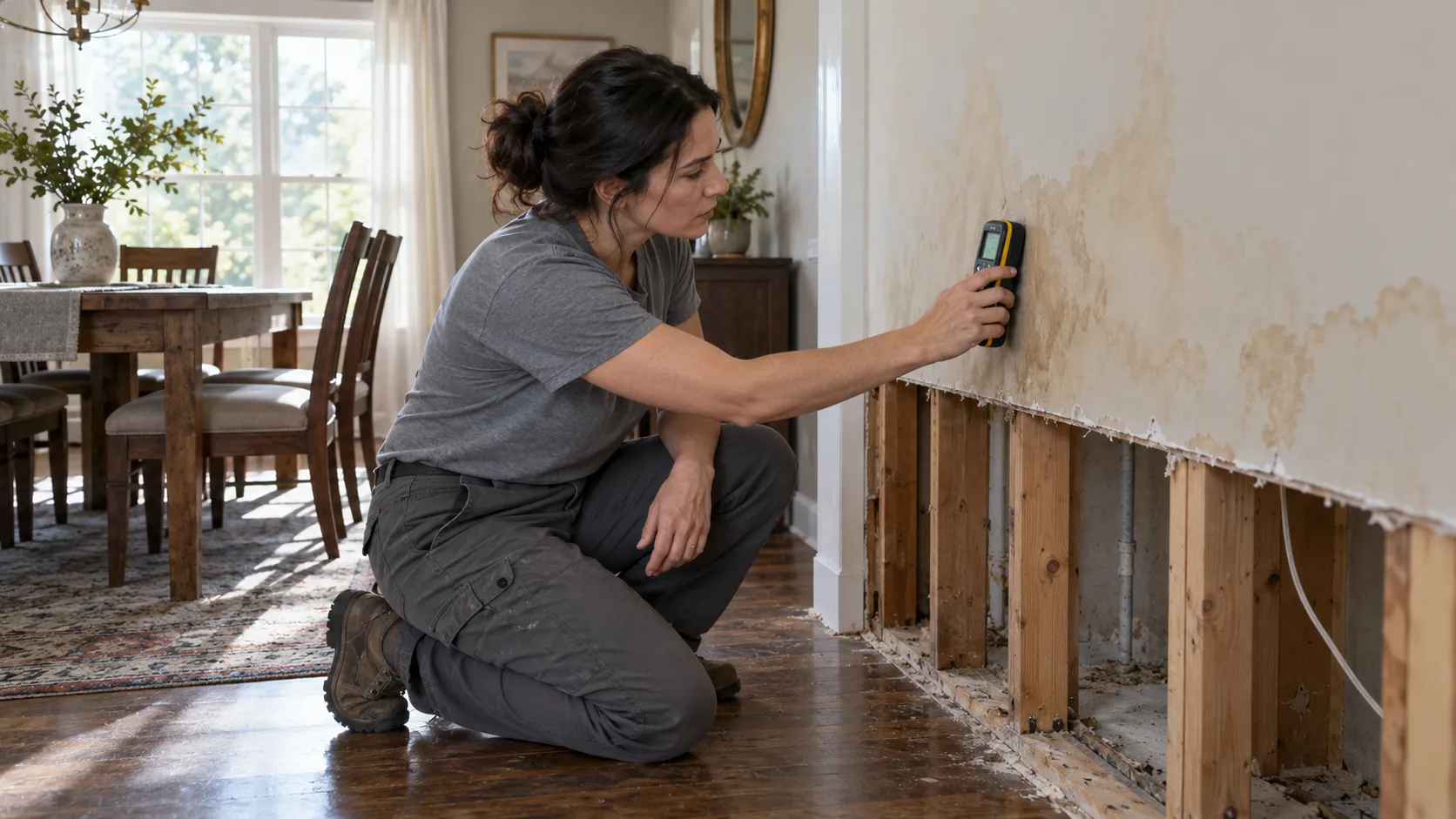
Water damage restoration is the full job of stopping the damage, drying the home, and fixing what the water changed. Think of it like a spilled drink on a couch. Wiping the top is easy, but the soak underneath is what causes trouble later.
Performingranks Restoration is a referral service. We do not do the work. We explain what is going on in plain words, show you which small tasks are safe to do yourself, and connect you with independent providers in our network. In the Volusia and Flagler County area, humid air and heavy summer storms can make damp spots spread fast, so knowing your limits early really helps.
If you just found water, take a breath. Your first job is to keep people safe. Water and electricity do not mix, so stay away from wet outlets, cords, and appliances until the power is off.
If the water is deep, or the panel itself is wet, do not walk in to flip a breaker. Call your electric company or a licensed electrician instead.
Think of this stage like putting a lid on a boiling pot. You are not cooking dinner yet. You are just slowing things down.
That is a good list. Know your limits, though. It helps, but it does not dry the house.
Water behaves like ink on a paper towel. It spreads outward and upward into drywall, baseboards, and wood. In a humid climate like ours, the air is already damp, so wet materials give up their moisture slowly.
Mold can begin to grow in a day or two when materials stay wet. That is why many providers can respond quickly when you call, and why it pays to check provider availability early.
You can handle a small spill from a sink or a cup of water on a hard floor. You should call a provider when any of these are true:
A fan and a towel cannot reach moisture inside a wall. Professional gear can.
A full job usually has several parts. Providers differ, so ask each one what is included.
Imagine a sponge that feels dry on top but is wet in the middle. Many homes are like that after a leak. Concrete block walls and slab floors hold moisture longer than people expect, and they can feel dry long before they are.
That is why providers measure moisture again and again before they call a job finished.
Not all water is the same. Providers often sort it into three groups.
This comes from a supply line or a broken pipe carrying fresh water. It is the least risky, but it can turn worse if left alone.
This comes from washing machines or dishwashers. It carries soap and some germs, so skip the DIY cleanup if it spread widely.
Sewage and storm floodwater fall here. Keep family and pets away. This is always a job for a provider.
Summer storms, hurricane season, and roof leaks bring a different kind of problem. Water can enter through tile or shingle roofs, windows, or low doors. Wet insulation above a ceiling can stay hidden for weeks. If a ceiling looks stained or sags, stay out from under it and call.
Some policies may cover sudden damage, such as a burst pipe. Slow leaks and floods often work differently, so check your policy and ask your agent.
Providers can often help document damage for a claim. Your photos, a list of damaged items, and written notes all help. Keep receipts for anything you buy.
Pick the way you would pick a mechanic. Ask questions and compare answers.
After drying, the repair stage begins. This may mean new drywall, paint, flooring, or trim. Take it step by step. A good provider will explain what is done, what is left, and when the moisture readings look healthy again.
Keep an eye on the area for a few weeks. If a musty smell returns, tell the provider.
A provider checks walls, floors, and ceilings with moisture meters to find water you cannot see.
Pumps and extractors take out standing water and soaked material safely.
Air movers and dehumidifiers pull moisture from framing, floors, and walls over several days.
Surfaces are cleaned, damaged materials are replaced, and the home is made ready to live in again.
Prices vary a lot by job size, water type, and how long the area stayed wet. These are typical U.S. ranges only. Always ask for a written quote before work starts.
| Item | Typical range | Notes |
|---|---|---|
| Small leak cleanup | $400 – $1,500 | One room, clean water, caught early |
| Water extraction | $500 – $2,500 | Depends on depth and area |
| Drying equipment | $800 – $3,000 | Often priced per day of use |
| Drywall and insulation repair | $300 – $3,000 | Varies by amount removed |
| Flooring replacement | $1,000 – $8,000 | Depends on material and size |
| Mold testing or treatment | $500 – $6,000 | Only if mold is found |
Shut off the water source and power to wet areas, and keep everyone out of danger.
Take photos and notes of the damage before moving anything, for your records and claim.
Reach out to be connected with a local provider and ask about their availability.
The provider removes water, dries the structure, and repairs what was damaged.
We explain what is happening and which small tasks are safe before you decide anything.
You are connected with independent providers in our network who work near you.
We tell you plainly what a homeowner can handle and what needs a pro.
Requesting an estimate is a simple first step, and you choose what to do next.
Not sure where to start? Request a callback to check provider availability, or request an estimate. There is no obligation, and your questions are welcome.
No obligationSmall, fresh spills on hard surfaces, yes. Water inside walls, under floors, or from sewage or storms needs professional equipment, because hidden moisture can lead to mold and rot.
Drying often takes several days, and repairs can add more time. The total depends on how much water there was, what it soaked, and the humidity in your home.
Some policies may cover sudden damage, like a burst pipe. Check your policy or ask your agent, and keep photos and records, since providers can often help document damage.
Not sure where to start? Request a callback to check provider availability, or request an estimate. There is no obligation, and your questions are welcome.
No obligation