Need water extraction & structural drying in Daytona Beach?
Not sure where to start? Request a callback to check provider availability, or request an estimate. There is no obligation, and your questions are welcome.
No obligation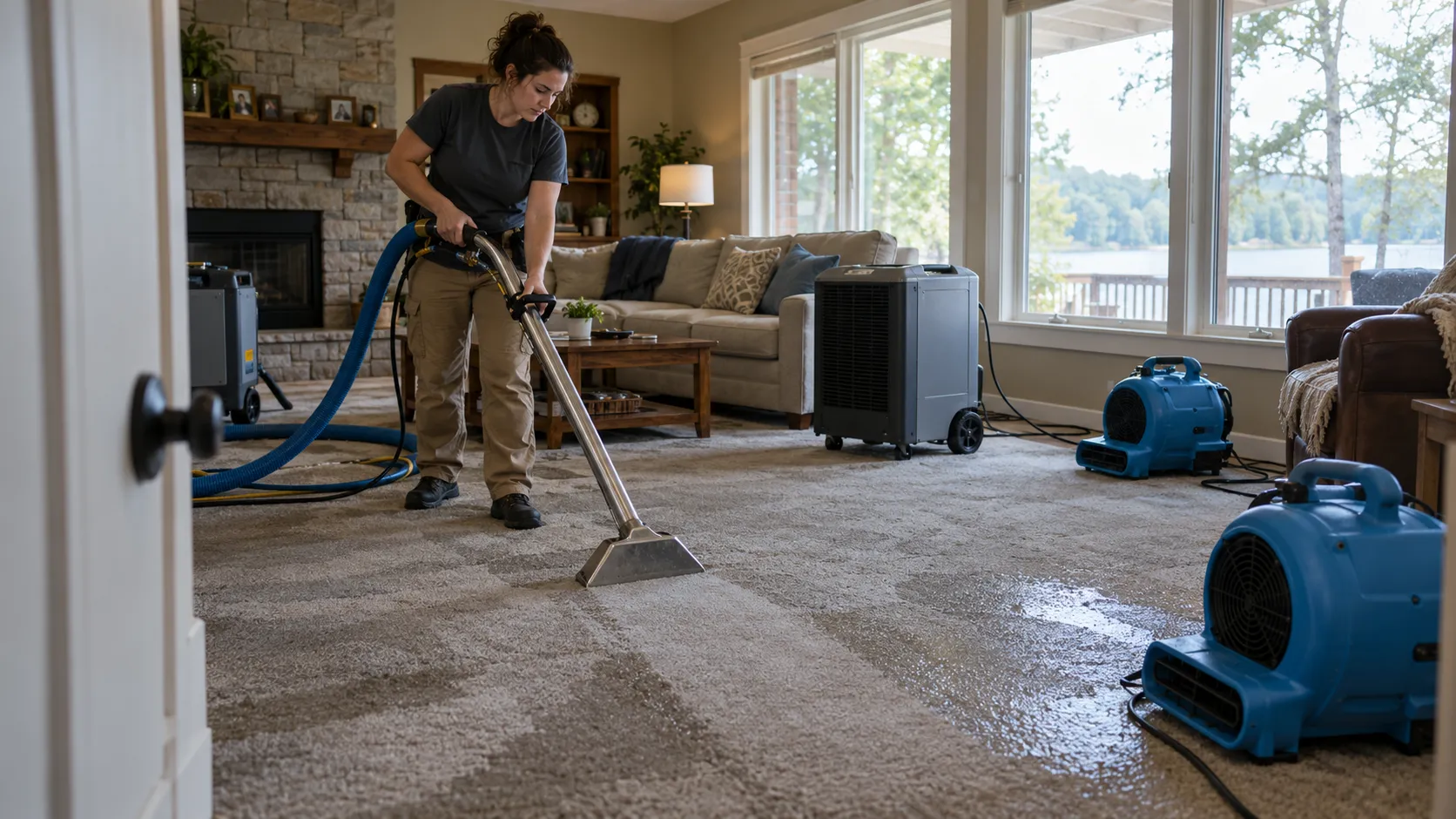
Water extraction is the first step. A provider uses pumps and strong vacuums to pull standing water out of your home. It is like bailing a boat before you fix the leak. A mop and towels cannot reach what soaks into floors and walls.
Structural drying comes next. Air movers and dehumidifiers pull the moisture out of drywall, subfloors, and framing. In humid places, this matters even more, because damp air slows drying and helps mold grow. Performingranks Restoration is a referral service. We connect you with independent providers in our network who do the work. Request a callback to check provider availability, or request an estimate.
If water is pooling on your floor right now, take a breath. You are not the first person this has happened to. Let's go through it in order, from most urgent to least.
Think of a wet sponge. Squeezing it out is quick. Getting it truly dry takes much longer. Your house works the same way.
Know your limits. Some things are fine to do yourself, and some are not.
If water is near outlets, appliances or a breaker panel, do not wade in. Electricity and water are a dangerous mix. Contact an electrician or a provider first.
Water from a storm, sewer line or toilet backup can carry germs. Treat it as unsafe to handle on your own.
Water does not stay where it lands. It soaks into drywall, wicks up walls, and slips under flooring. The longer it sits, the deeper it goes.
In a humid climate, mold can start to grow within a couple of days when materials stay damp. That is why many providers can respond quickly once you reach out. Ask about availability, since it varies.
Many homes in the Volusia and Flagler County area are concrete block on a slab. Block does not rot like wood, but it holds moisture. Water also gets into baseboards, cabinets, carpet pads and the lower part of interior walls.
A provider starts by finding out how much water there is and where it came from. Then the pulling begins.
Portable pumps move deep water. Truck-mounted or portable extractors act like giant wet vacuums. A household shop vac is a small version of the same idea, but it cannot keep up with a large spill.
You can safely soak up a small puddle with towels and a mop. A shop vac made for wet use can help with a shallow spill. If water is more than a thin layer, or has soaked carpet and padding, you need pro equipment.
Imagine hanging wet laundry in a closed closet. It stays damp. Open the window and add a fan, and it dries. Structural drying uses that same idea on your walls and floors.
Air movers blow air across wet surfaces. Dehumidifiers pull the moisture out of that air so it can take on more. Together they dry the whole house, not just the visible wet spots.
Wet drywall can look fine and still be damp inside. Providers use meters to check readings in walls, floors and framing. A home fan cannot tell you that.
Sometimes a provider cuts a small hole in a wall or lifts baseboards so air can reach the wet cavity. Materials that stay soaked may need to be removed.
Most jobs take a few days, but it depends. The amount of water, the materials and the humidity all play a part. In a muggy coastal climate, drying can take longer because the air already holds so much moisture.
The provider checks readings each visit. Equipment usually stays until the numbers return to normal.
On a humid day, outside air can add moisture. Your provider may ask you to keep windows closed and the air conditioning running at a set level.
A few small jobs help and keep you safe.
Some policies may cover sudden damage, so check your policy. Providers can often help document damage for a claim.
A good conversation up front avoids surprises. Try these:
If you are unsure, a short conversation can answer a lot. Hours vary by provider, so Request a callback to check availability.
Pumps and extractors pull pooled water off floors and out of carpet before it spreads further.
Meters find hidden damp spots inside walls and floors that you cannot see.
Equipment is placed to move air and pull moisture out of wet materials.
The provider rechecks moisture readings and adjusts equipment until the structure reaches normal dryness levels.
Prices vary a lot by water amount, home size and region. These are typical U.S. ranges only. Always ask for a written quote before work begins.
| Item | Typical range | Notes |
|---|---|---|
| Small extraction (one room) | $300 – $1,000 | Shallow water, quick job |
| Large extraction (several rooms) | $1,000 – $4,000 | More water, more equipment |
| Structural drying equipment | $800 – $3,500 | Often priced per day or per unit |
| Moisture inspection | $100 – $500 | Sometimes included in the job |
| Carpet pad removal | $100 – $600 | Depends on room size |
| Drywall cutout and removal | $300 – $1,500 | Only if materials stay wet |
Call or request an estimate, and tell us a little about the water.
We refer you to a local provider in our network.
The provider checks the damage and explains the plan and quote.
Water is pulled out first, then equipment dries the structure.
We explain each step simply so you know what is happening and why.
Providers in our network are local businesses that do the actual work.
We show what you can do safely and when to call someone.
Requesting an estimate does not commit you to hiring anyone.
Not sure where to start? Request a callback to check provider availability, or request an estimate. There is no obligation, and your questions are welcome.
No obligationMost homes take about three to five days, though it varies. The amount of water, the materials and the humidity all matter. The provider checks moisture readings and keeps equipment running until the structure is dry.
For a very small, clean spill, yes. For larger leaks or water inside walls, home fans usually cannot reach the moisture. Pro equipment and meters help make sure the structure is truly dry.
Some policies may cover sudden damage, such as a burst pipe, but not slow leaks or flooding. Check your policy. Providers can often help document damage for a claim.
Not sure where to start? Request a callback to check provider availability, or request an estimate. There is no obligation, and your questions are welcome.
No obligation